
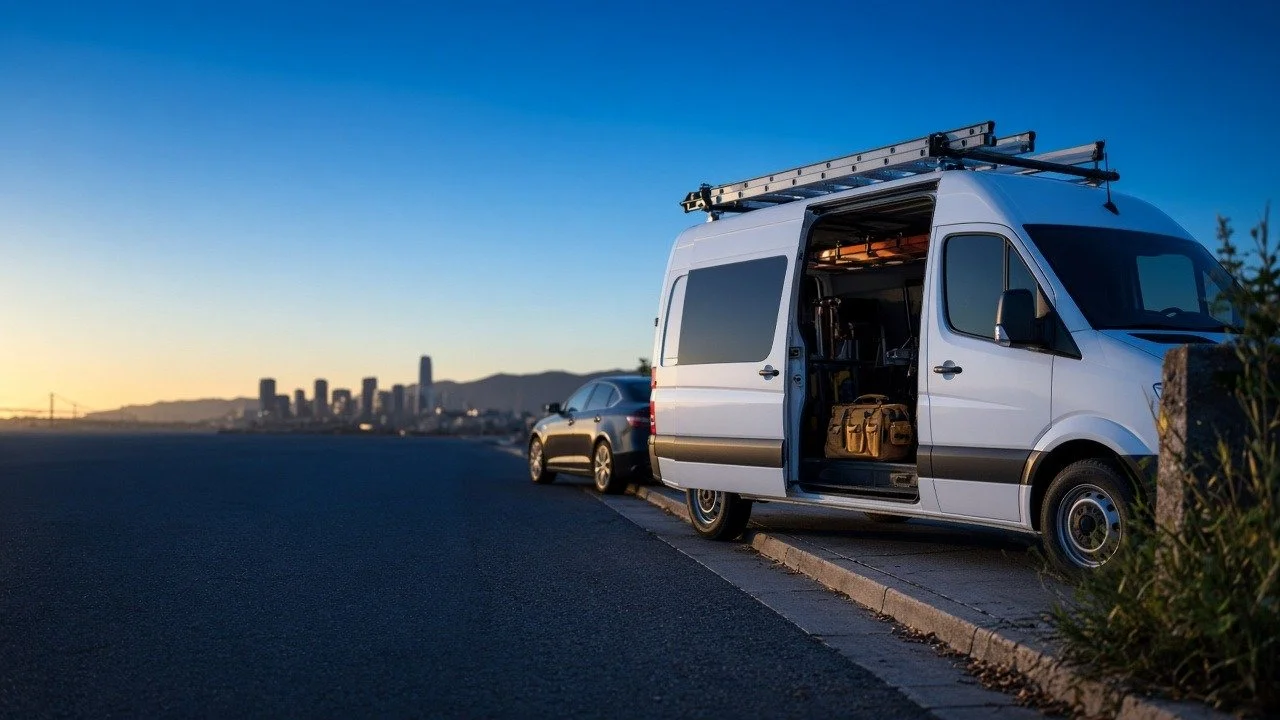
Your lead tech takes their own sedan to the site. The helper rides shotgun. The company van stays at the shop because the job is a punch-list, not a full haul.
Then the general contractor’s office emails: update the certificate — and this time they want automobile liability called out, not just general liability.
For a lot of California artisan contractors (HVAC, electricians, flooring, landscapers, plumbers), that is the first time “commercial auto stops meaning “we own a truck” and starts meaning “people drive for the business even when the business does not own the car.”
What Hired & Non-Owned Auto is (in plain words)
Non-owned auto is about liability that can attach to the business when someone uses a vehicle the business does not own — often an employee’s or owner’s personal car — on company business.
Hired auto is the cousin for vehicles you rent, hire, or borrow for work (a one-day box truck, a weekend rental, a short-term lease).
Together, people shorthand that conversation as Hired & Non-Owned Auto (HNOA). It is not a magic stamp. It is a coverage conversation about who is driving what for which jobs — and whether a Farmers commercial auto path can address the liability the lease or GC packet is pointing at.
Personal auto policies are built for personal use. When driving is part of how the business gets paid, “my personal policy will handle it” is often the wrong assumption. We say what Farmers can place for your risk. We do not invent language because a PDF appendix wants hopeful wording.
What usually shows up in the commercial auto conversation
1) Who drives for the business — owners, W-2 crew, 1099 helpers, spouses on errands that are really job runs.
2) What they drive owned vans and pickups, personal cars to the site, occasional rentals, trailers.
3) What the GC / owner / landlord packet actually asks for — auto liability limits, any-auto vs scheduled autos, hired/non-owned wording, additional insured requests tied to auto.
4) What is already in force — certificate of insurance is evidence of coverage that is already in place (or on a clear bind path). No in-force (or bindable) auto path? We do not fake a COI line.
Same rule as every other lane at SDL Commercial Insurance:
• Have an in-force policy we can write from? We issue the certificate from it.
• No policy yet? Book first, get a bindable path, certificate after.
Owned vans still matter
HNOA talk does not replace coverage for the vans and trucks you do own. Tools on the truck, jobsite parking, loan/lease payoff questions, and how the vehicle is used day to day still belong in a commercial auto review. If the shop truck is the backbone of the trade, start there — then layer the “crew drove their own cars” question so the certificate request does not surprise you mid-week.
What to bring to the Book call
• The insurance exhibit or COI instructions from the GC / owner / property manager.
• A quick roster of who drives for work and whether those vehicles are company-owned or personal.
• Any current commercial auto or business package declarations (if you have them).
• Prior certificates (so we see what was listed before).
Coverage Calculator on the site is a planning tool — it helps you think through limits and lanes. It is not a quote, a binder, or a rate.
Next step this week
Book: https://www.sdlcommercialinsurance.com/schedule?utm_campaign=blog_daily&utm_content=blog_sep24
Call: (408) 876-7107
Samuel D Landers · California Insurance License #4538988
SDL Commercial Insurance · Samuel D Landers Agency · Farmers Insurance agent
Farmers-only agency. Not all coverages or vehicles are available for every risk. Restrictions, exclusions, limits, and conditions apply. This post is general information, not a policy or guarantee of placement.
