
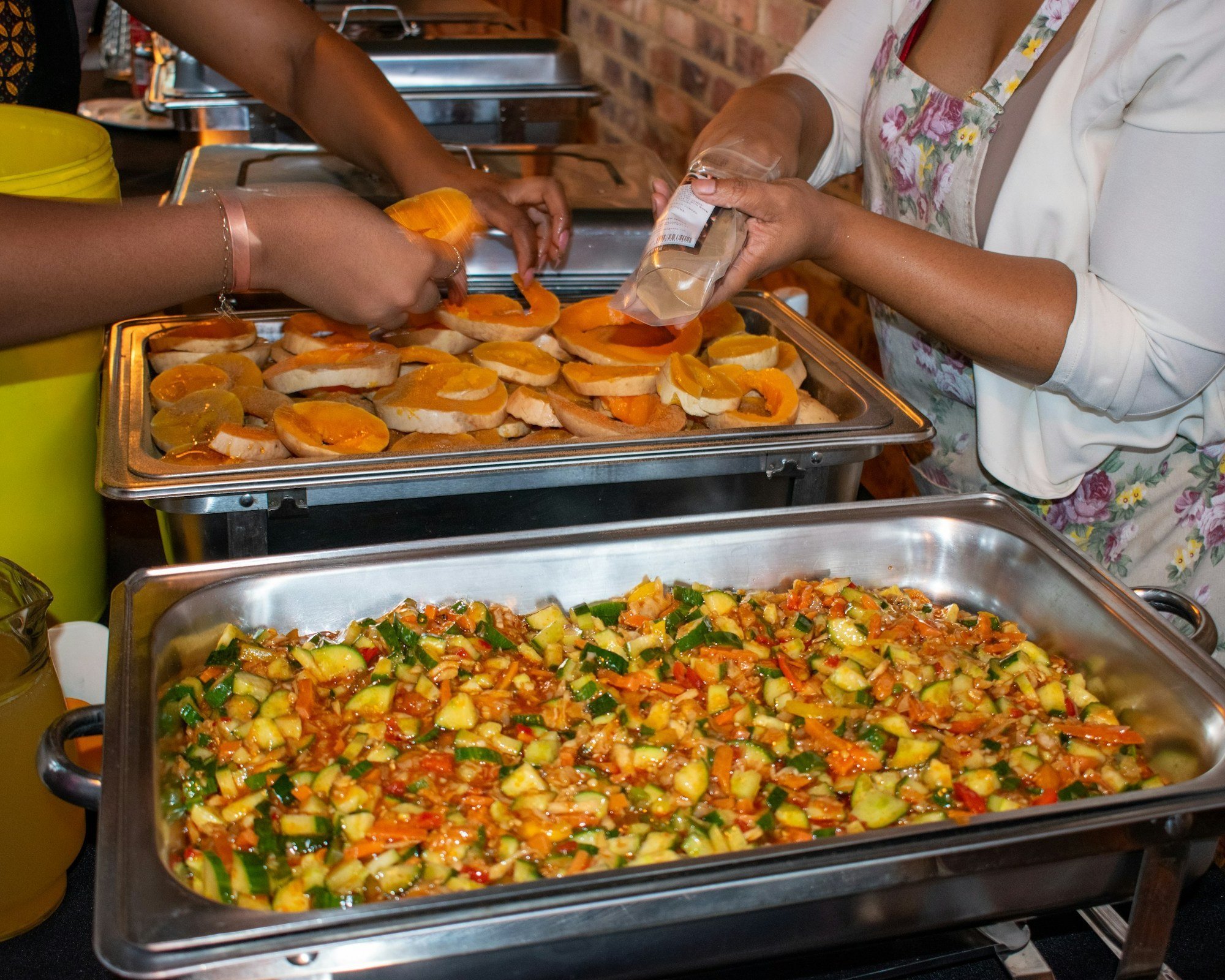
A caterer’s kitchen does not move. The food does. Trays go into a van at 9 a.m., the van crosses two cities, and by noon your staff is setting up chafing dishes at a venue you have never seen before. Somewhere in that morning, a venue coordinator emails asking for a certificate naming them.
That is the moment many California caterers realize they have been thinking about the kitchen and the vehicle as two separate problems. In practice, the conversation usually works better as one.
Education only, not legal advice. What can be placed depends on the policy, the risk, and underwriting.
One problem: the risk changes every time the food leaves the building
At the kitchen, you know the layout, the equipment, and who is working. On a delivery run or at an off-site event, a few things shift at once:
A vehicle is carrying people, food, and gear on a schedule.
Staff may drive their own cars to the venue or run a quick errand for ice.
Your equipment is sitting in someone else’s building for a few hours.
The venue may want its name on a certificate before you load in.
None of that is unusual. It just means the conversation about the kitchen and the conversation about the van belong in the same call.
A Farmers-safe answer (plain words)
At SDL Commercial Insurance (Samuel D Landers Agency, a Farmers appointment), we start with how your catering business actually runs, then talk through what Farmers can usually place for that risk. Here is what usually comes up:
The van or vehicles used for the business. Who owns them, who drives them, and how often they run. A van titled to the business and used for deliveries is a commercial auto conversation, not a personal auto one.
Staff driving their own cars. If an employee drives to a venue or makes a supply run in their own car, say so up front. We covered the crew version in crew personal cars and hired / non-owned auto; the same question applies to catering staff.
The kitchen and the off-site event. General liability, how equipment away from your premises is handled, and whether you serve alcohol at events. Each of those changes the conversation, and terms depend on the policy.
Venue certificate and additional insured asks. Bring the venue’s actual request. A certificate only reflects what is already in force (or on a clear bind path). It does not create coverage the policy does not have.
Workers’ comp for event staff. Who works events, and how they are paid if you know. We do not invent classification rulings; that is coverage alignment, not counsel.
None of this is a guarantee of terms. We place Farmers products only; we do not shop other carriers.
What to bring to the call
Business name and entity type
Vehicle list (year, make, model) and who drives each one
Rough notes on how often staff use their own cars for work
A typical week of events and deliveries, and roughly how far you travel
Any venue certificate requests, the actual pages
Current policies or renewal notices, if you have them
Bring what you have. We sort the rest on the call.
In force or not yet
Have an in-force policy we can write from? We issue the certificate from it. No policy yet? Book, bind, then certificate. A certificate is issued only from an in-force or bindable policy, never ahead of it.
Next step
Book a call → https://www.sdlcommercialinsurance.com/schedule?utm_source=blog&utm_medium=organic&utm_campaign=blog_oct06
Coverage Calculator (planning only, not a quote) → https://calculator.sdlcommercialinsurance.com/
Or call (408) 876-7107
Samuel D Landers · California Insurance License #4538988 · SDL Commercial Insurance · Samuel D Landers Agency
