
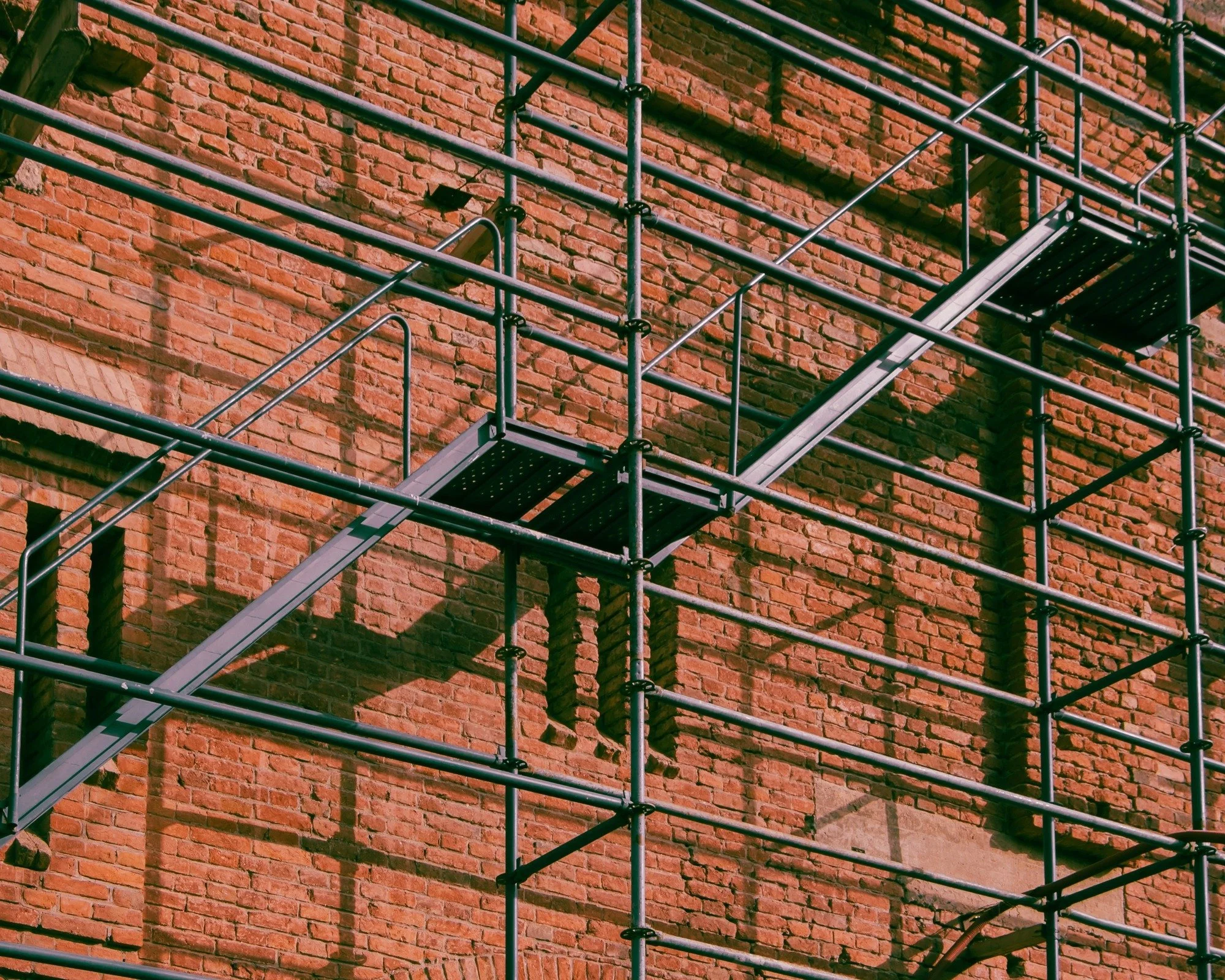
Picture a 1960s two-story building on a Bay Area street: shops downstairs, offices upstairs, some original wiring. A fire in one tenant space damages part of it. The repair estimate answers “what does it cost to put back what was there?” The next question is harder: “what will the city require when we rebuild?”
Depending on the city and the extent of damage, the local building department may expect the rebuilt portion to meet today’s code. That gap is what the ordinance-or-law conversation is about, and it is much easier to have at renewal than after a loss.
Education only, not legal or building-code advice. What can be placed depends on the policy, the risk, and underwriting.
One problem: today’s code can cost more than yesterday’s building
After a covered loss, an older building can run into costs that a like-for-like repair estimate does not show:
Upgrades required on the rebuilt portion, such as fire sprinklers, accessibility, electrical, energy or structural items
Tearing down undamaged parts of the building, if local rules require it
Higher construction cost because the work has to meet current standards
Extra time, which can keep tenants out longer (lost rents are their own part of the policy)
How those costs are treated depends on how the property coverage is written. Costs driven by a building ordinance or law are often limited or excluded unless ordinance-or-law coverage is part of the policy, and where it is available it usually has its own limits and conditions.
A Farmers-safe answer (plain words)
At SDL Commercial Insurance (Samuel D Landers Agency, a Farmers appointment), we start with the building itself, then talk through what Farmers can usually place for it. Here is what usually comes up:
Year built and major updates. Roof, electrical, plumbing, HVAC and any seismic retrofit, with rough years.
Whether and how ordinance or law is written. We look at your current policy with you and ask whether ordinance-or-law coverage is on it, how it is written, and whether it is available for the building on a Farmers policy. We do not assume it is there, and we do not promise it.
The usual pieces. These conversations usually cover the value of undamaged parts that must come down, the cost of demolition, and the increased cost to rebuild to code. Each piece can carry its own limit, depending on the policy.
A rebuild number to start from. The Coverage Calculator’s “Building cost to rebuild” field is a planning starting point. It is planning only, not a quote, a binder, or a rate, and code-upgrade costs are a separate question on top of it.
Code questions go to the right people. What your city would actually require on a rebuild is a question for the local building department, a licensed contractor, or an engineer. We bring what they tell you into the insurance conversation.
None of this is a guarantee of terms. Availability, limits, exclusions and conditions apply. We place Farmers products only; we do not shop other carriers.
What to bring to the call
Building address, size, construction type and year built
Years of major updates (roof, electrical, plumbing, HVAC, seismic retrofit), if known
Current property policy or renewal notice
Any recent appraisal or replacement-cost estimate
Notes from the city, a contractor or an engineer about code items, if you have them
Planning numbers from the Coverage Calculator, if you ran it
Bring what you have. We sort the rest on the call.
In force or not yet
Have an in-force policy we can write from? We issue the certificate from it. No policy yet? Book, bind, then certificate. A certificate is issued only after coverage is bound and in force, never ahead of it.
Next step
Coverage Calculator (planning only, not a quote) → https://calculator.sdlcommercialinsurance.com/
Book a call → https://www.sdlcommercialinsurance.com/schedule?utm_source=blog&utm_medium=organic&utm_campaign=blog_oct07
Or call (408) 876-7107
Samuel D Landers · California Insurance License #4538988 · SDL Commercial Insurance · Samuel D Landers Agency
