
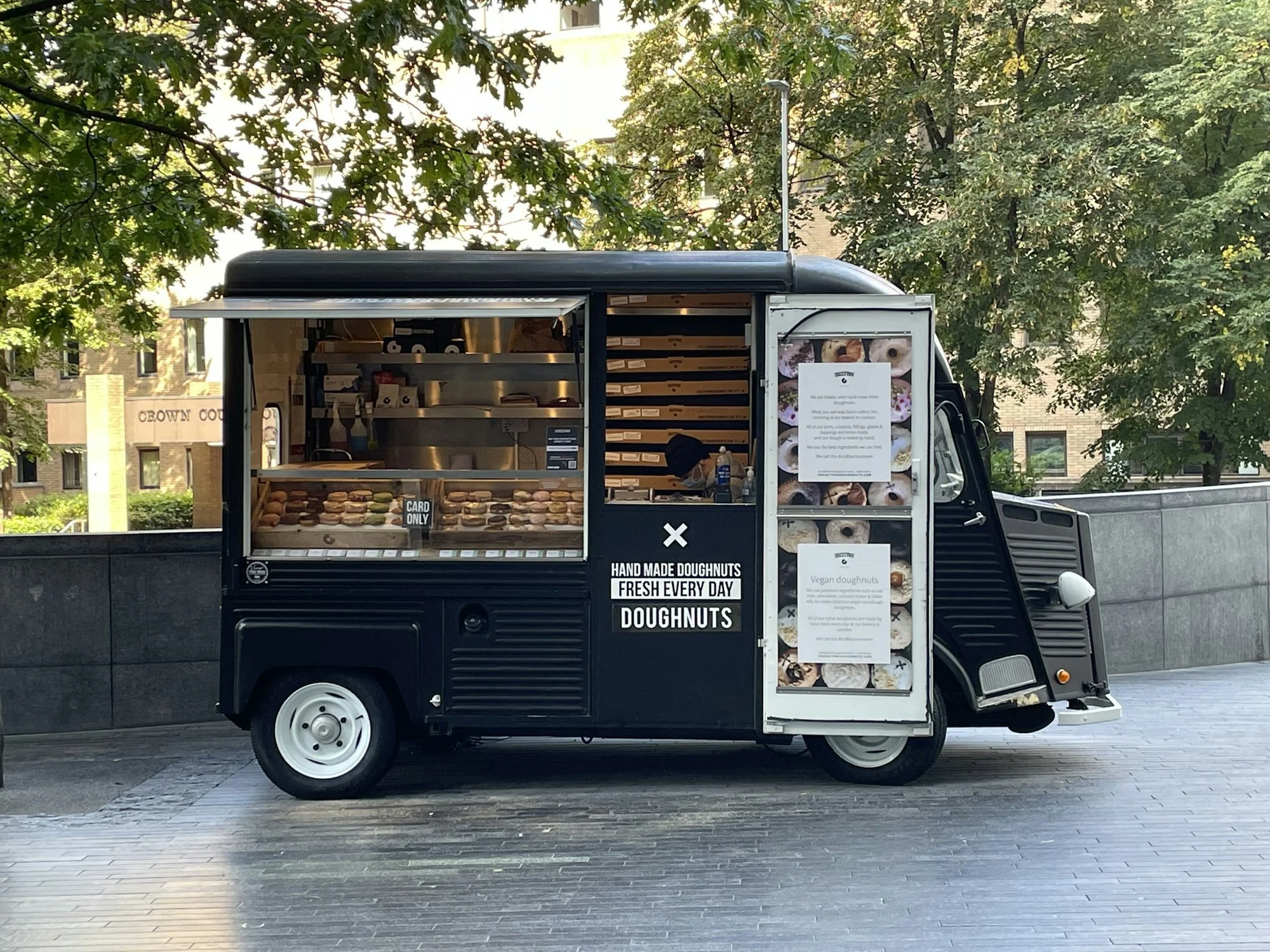
Same California food business. Completely different coverage conversation — depending on whether you sell from a food truck / mobile cart or a fixed brick-and-mortar kitchen.
That distinction often shows up late: after a permit packet asks for proof, a venue wants additional insured wording, or someone assumes a restaurant talk covers a truck that moves every day.
One problem: mobile and fixed are not the same talk
Food & beverage insurance is not one generic “restaurant stamp.” A mobile unit brings the vehicle, overnight parking, equipment and stock on wheels, and the venu
es you serve. A brick-and-mortar space brings the premises, landlord asks, kitchen and storefront exposure, and how long you can pause if the building is shut. Treating a truck like a storefront (or the other way around) is how gaps show up at the worst time.
If you are sorting out what to discuss after a kitchen loss, we covered that in Kitchen claim vs storefront. This post starts earlier: how the business model itself, mobile or fixed, changes the conversation up front.
A Farmers-safe answer (plain words)
At SDL Commercial Insurance (Samuel D Landers Agency — Farmers appointment), we start with how you actually operate, then match that to what Farmers can usually place for the risk — not a copy-paste certificate from a different setup.
What usually shows up when mobile and brick-and-mortar sit side by side:
Auto vs premises — a food truck or catering van is a vehicle conversation (who drives, where it is garaged, what it carries). A fixed restaurant leans harder on the building and where customers sit. Many operators need both if they deliver, cater, or park a truck between shifts.
Equipment and stock — fryers, prep gear, and inventory live differently in a truck than in a fixed kitchen. Values, overnight security, and spoilage often come up earlier on the mobile side.
Business income (BI) — if a covered loss sidelines the truck or shuts the dining room, how long can you pause? Downtime looks different when your kitchen is a vehicle vs a leased space.
Venue, permit, and landlord context — event organizers, commissary kitchens, city permit packets, and landlords each ask for proof in their own words. We read the actual pages. Local rules vary, and we won't guess at a city requirement for you.
Certificate asks — additional insured, waiver language, or auto limits on a venue exhibit. A certificate only reflects what is already in force (or on a clear bind path). It does not invent a truck schedule or storefront occupancy that is not on the policy.
None of this is a guarantee of terms. Availability, limits, and form language depend on the policy and the risk.
Running a truck already? Start at Food truck insurance in California. Catering-heavy shops can also skim Catering insurance in California. Those pages support the talk — this post is about why mobile vs fixed changes the questions.
What to bring to the call
Plain-English description: food truck / trailer / cart, brick-and-mortar, or both
Vehicle details if mobile: year, make, model, VIN, overnight parking, who drives
Lease or landlord insurance exhibit (brick-and-mortar), or commissary paperwork if you use one
Venue, event, or permit insurance asks — the actual pages, with deadlines
Rough equipment and stock values (planning numbers are fine)
Whether you already have an in-force policy we can write a certificate from
In force or not yet
Have an in-force policy we can write from? We issue the certificate from it. If the ask does not match the use on the policy, we talk about that before anyone fills in a form.
No policy yet? Book first, bind path next, certificate after. A certificate is issued only from an in-force or bindable policy — never ahead of it.
Next step
Book a call → https://www.sdlcommercialinsurance.com/schedule?utm_source=blog&utm_medium=organic&utm_campaign=blog_oct01
Coverage Calculator (planning only, not a quote) → https://calculator.sdlcommercialinsurance.com/
Or call (408) 876-7107
Samuel D Landers · California Insurance License #4538988 · SDL Commercial Insurance · Samuel D Landers Agency
