
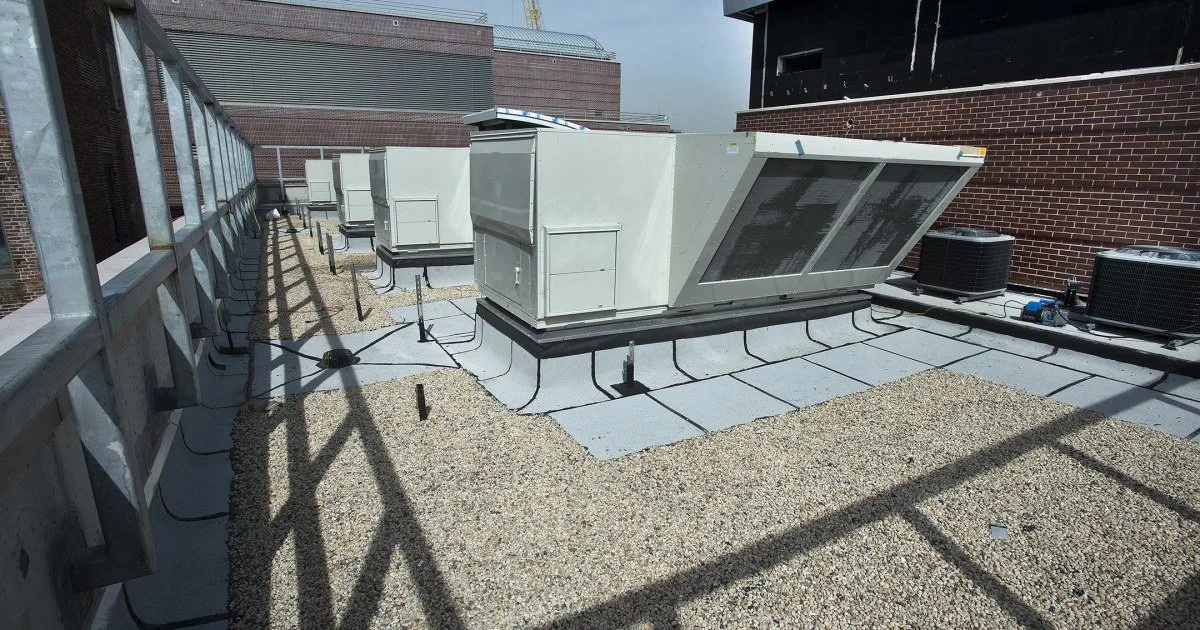
Photo: Metropolitan Transportation Authority / Patrick Cashin via Wikimedia Commons, CC BY 2.0, modified
The first big storm of the season rolls in overnight. By morning there is standing water on the flat roof, a stain spreading across a ceiling tile on the top floor, and a tenant asking who is coming to look at it.
Most owners and facilities managers only think hard about the roof when it is already leaking. The better time is now, before the heavy rains.
Education only, not legal advice. What can be placed depends on the policy, the risk, and underwriting.
One problem: nobody has the roof file
Ask a building owner how old the roof is and the answer is often a guess. The roofer who did the last job is long gone, the warranty is in a drawer somewhere, and the maintenance log is a few emails. That gap matters, because roof condition usually comes up in two places:
- How the building is looked at when coverage is written or renewed
- How a storm or water loss is talked through after it happens
Sudden storm damage and slow wear, deterioration or skipped maintenance are often treated differently, depending on the policy, its terms and its exclusions. Clear records make that conversation easier for everyone.
If you are also checking what it would cost to rebuild, roof type and year feed that number too. We covered that in our post on building values at renewal. This post is about the roof itself.
A Farmers-safe answer (plain words)
At SDL Commercial Insurance (Samuel D Landers Agency, a Farmers appointment), we start with the building as it actually stands, then talk through what Farmers can usually place for that risk. Here is what usually comes up about the roof:
- Age and material. The year it was installed or last replaced, and what it is: built-up, modified bitumen, single-ply, tile, metal or something else.
- Repairs and inspections. Recent patch work, a roofer's inspection report, and photos, especially of drains, flashing and anything around rooftop equipment.
- Drainage. Roof drains, scuppers and gutters cleared before the rains. Standing water after a storm is worth a call to your roofer.
- Who maintains it. For buildings with tenants, the lease usually says who handles roof upkeep. Know which side that is before a leak, not after.
- What happens after a storm. Who to call first, how to protect the space, and how to report a loss under the policy. Terms depend on the policy and the risk.
None of this is a guarantee of terms, rates or claim outcomes. We place Farmers products only; we do not shop other carriers.
What to bring to the call
- Building address, year built and how the building is used
- Roof age, material and the last replacement or major repair
- Recent inspection reports, invoices or photos
- Your current property policy or renewal notice
- The lease pages on roof maintenance, if you have tenants
Bring what you have. We sort the rest on the call.
In force or not yet
Have an in-force policy we can write from? We issue the certificate from it. No policy yet? Book, bind, then certificate. A certificate is issued only after coverage is bound and in force, never ahead of it.
Next step
Or call (408) 876-7107
Samuel D Landers · California Insurance License #4538988 · SDL Commercial Insurance · Samuel D Landers Agency
