
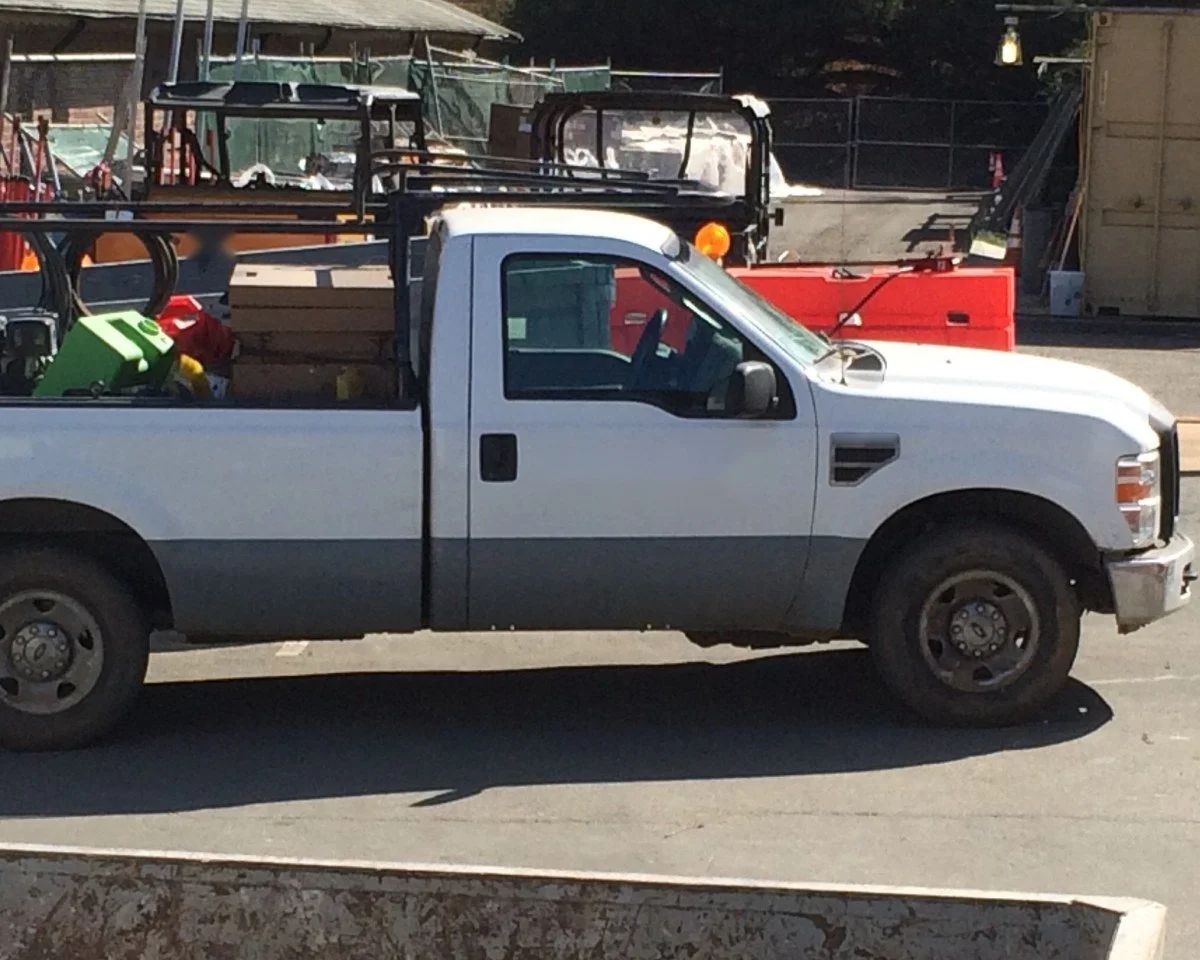
Photo: TaurusEmerald / Wikimedia Commons, CC BY-SA 4.0, modified
An electrician forms an LLC a couple of years into the business. The work truck came first, bought in their own name before the LLC existed. Now the truck runs every job for the company, the company pays for the gas, and the logo magnets go on in the morning. The title and registration still say the owner's personal name.
That happens all the time with small contractors. It is worth looking at before the auto policy renews, or before a new truck gets added, because the name on the title is one of the first things an underwriter usually lines up with the policy.
Education only, not legal or tax advice. What can be placed depends on the policy, the risk, and underwriting.
One problem: the title, the registration and the policy name different owners
A commercial auto policy names a business as the insured and lists the vehicles it covers. The title and registration name whoever legally owns each vehicle. When those don't match, questions usually come up:
- The truck is titled to the owner personally, but the policy is in the LLC's name
- One truck is titled to the LLC, another to the owner, a third to a spouse
- A truck is financed, so a lender appears on the title too
- Nobody is sure which name is on which registration card
How a mismatch is handled depends on the policy and underwriting. Sometimes another named insured or an added interest is part of the conversation; sometimes the answer is different. The point is to find out while nothing has happened, not after a claim.
A Farmers-safe answer (plain words)
At SDL Commercial Insurance (Samuel D Landers Agency, a Farmers appointment), we start with the paperwork for each vehicle, then talk through what Farmers can usually place. Here is what usually comes up:
- Whose name is on each title. Pull the title or registration for every vehicle the business uses and note the registered owner on each one.
- Who the policy names. Compare that list to the named insured on your current commercial auto policy or quote.
- Who pays and who drives. Who makes the payments, who drives day to day, and whether the truck is ever used for personal errands. Those details matter to how the vehicle is described.
- Lenders and leases. If a bank or leasing company is on the title, bring that too.
- Whether to change ownership. That is a question for your attorney or tax professional, not your insurance agent. We work with whatever the paperwork actually says. For a larger fleet owned across entities, see our post on maintenance trucks at property management firms.
Lining up the names does not promise a particular rate or terms. It keeps the policy closer to how the trucks are really owned and used. None of this is a guarantee of terms. We place Farmers products only; we do not shop other carriers.
What to bring to the call
- Business name and entity type
- Title or registration for each vehicle (a photo is fine)
- Vehicle list (year, make, model) and where each is garaged
- Any lender or lease paperwork
- Driver list
- Current commercial auto policy or renewal notice
Bring what you have. We sort the rest on the call.
In force or not yet
Have an in-force policy we can write from? We issue the certificate from it. No policy yet? Book, bind, then certificate. A certificate is issued only after coverage is bound and in force, never ahead of it.
Next step
Or call (408) 876-7107
Samuel D Landers · California Insurance License #4538988 · SDL Commercial Insurance · Samuel D Landers Agency
