
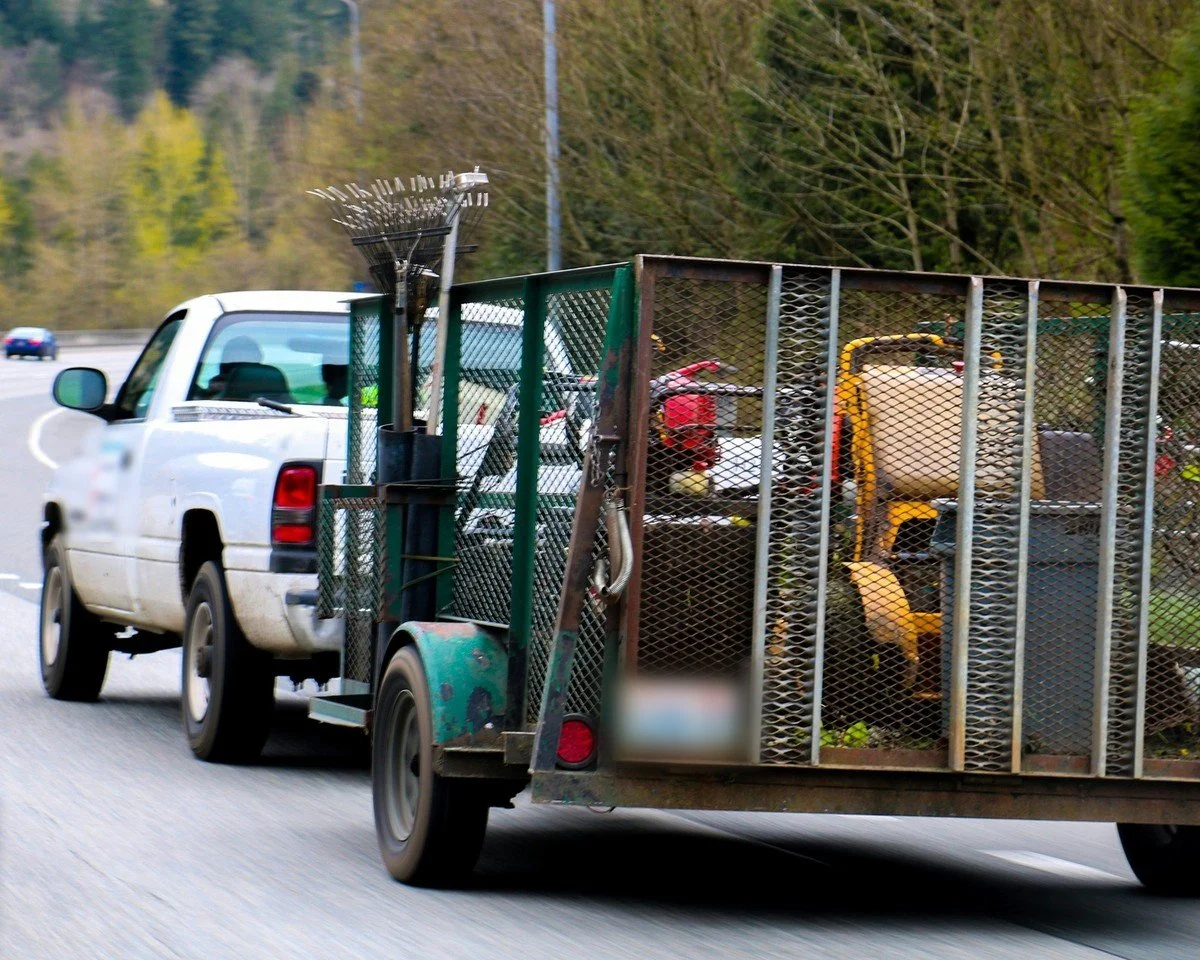
A landscaping crew in the South Bay runs two pickups. One tows a 12-foot open utility trailer carrying a commercial mower, a couple of trimmers, a blower and a rake rack bolted to the front. On busy weeks the other truck borrows a smaller trailer. Every morning the trailers get hitched, loaded and pulled from yard to yard without much thought.
Then a simple question comes up at renewal: which trailers are on the policy, and what about the mower riding on it?
Education only, not legal advice. What can be placed depends on the policy, the risk, and underwriting.
One problem: the trailer gets treated like part of the truck
Because a trailer rolls behind a listed vehicle, it is easy to assume it is handled the same way. Whether and how a trailer is treated on a commercial auto policy depends on the policy and how the trailer is listed, and the equipment riding on it is usually a different question again. Details like these often drift away from what the policy says:
A second or bigger trailer was bought, and nobody told the agent
A trailer gets borrowed or rented for a big job
The trailer stays loaded and parked at a jobsite or the yard overnight
A new mower or other equipment joined the load
A different truck, or a newer driver, now does the towing
A Farmers-safe answer (plain words)
At SDL Commercial Insurance (Samuel D Landers Agency, a Farmers appointment), we start with the trailers you actually tow and what rides on them, then talk through what Farmers can usually place for that risk. Here is what usually comes up:
Name each trailer. Type (open utility, dump, enclosed or equipment), size, year and VIN, and whether you own it, borrow it or rent it. A short list beats "we have a couple of trailers."
Which truck tows it, and who drives. Which vehicle usually pulls each trailer and who is behind the wheel. Towing can change how a vehicle and driver are viewed, depending on the policy.
How it is used. Daily yard-to-yard routes, green waste runs, moving equipment between jobsites, or an occasional haul. Write down what you already do so the description matches the day-to-day.
What rides on it. Mowers, trimmers, blowers and hand tools are usually a separate conversation from the trailer itself. Depending on the policy, equipment may be handled under a different part of a business policy, where available, so bring a rough list with values.
Where it sits when it is not moving. Unhitched at a jobsite, at the yard, or at a crew member's home overnight, and whether it stays loaded.
Adding a truck to pull that second trailer? We covered fleet growth in adding a second van. Crew members towing with their own pickups are a separate talk, covered in crew drives personal cars to the job.
None of this is a guarantee of terms. Availability, limits, exclusions and conditions apply. We place Farmers products only; we do not shop other carriers.
What to bring to the call
Business name and the work you do (landscaping, hardscape, tree work or another trade)
Trailer list: type, size, year, VIN, and owned, borrowed or rented
Which truck tows each trailer, and who usually drives it
A rough list of the equipment that rides on each trailer, with approximate values
Where trailers are kept overnight, and whether they stay loaded
Current commercial auto policy or renewal notice
Bring what you have. We sort the rest on the call.
In force or not yet
Have an in-force policy we can write from? We issue the certificate from it. No policy yet? Book, bind, then certificate. A certificate is issued only after coverage is bound and in force, never ahead of it.
Next step
Book a call → https://www.sdlcommercialinsurance.com/schedule?utm_source=blog&utm_medium=organic&utm_campaign=blog_oct13
Or call (408) 876-7107
Samuel D Landers · California Insurance License #4538988 · SDL Commercial Insurance · Samuel D Landers Agency
